
Grey Blending for Softer, Natural Regrowth
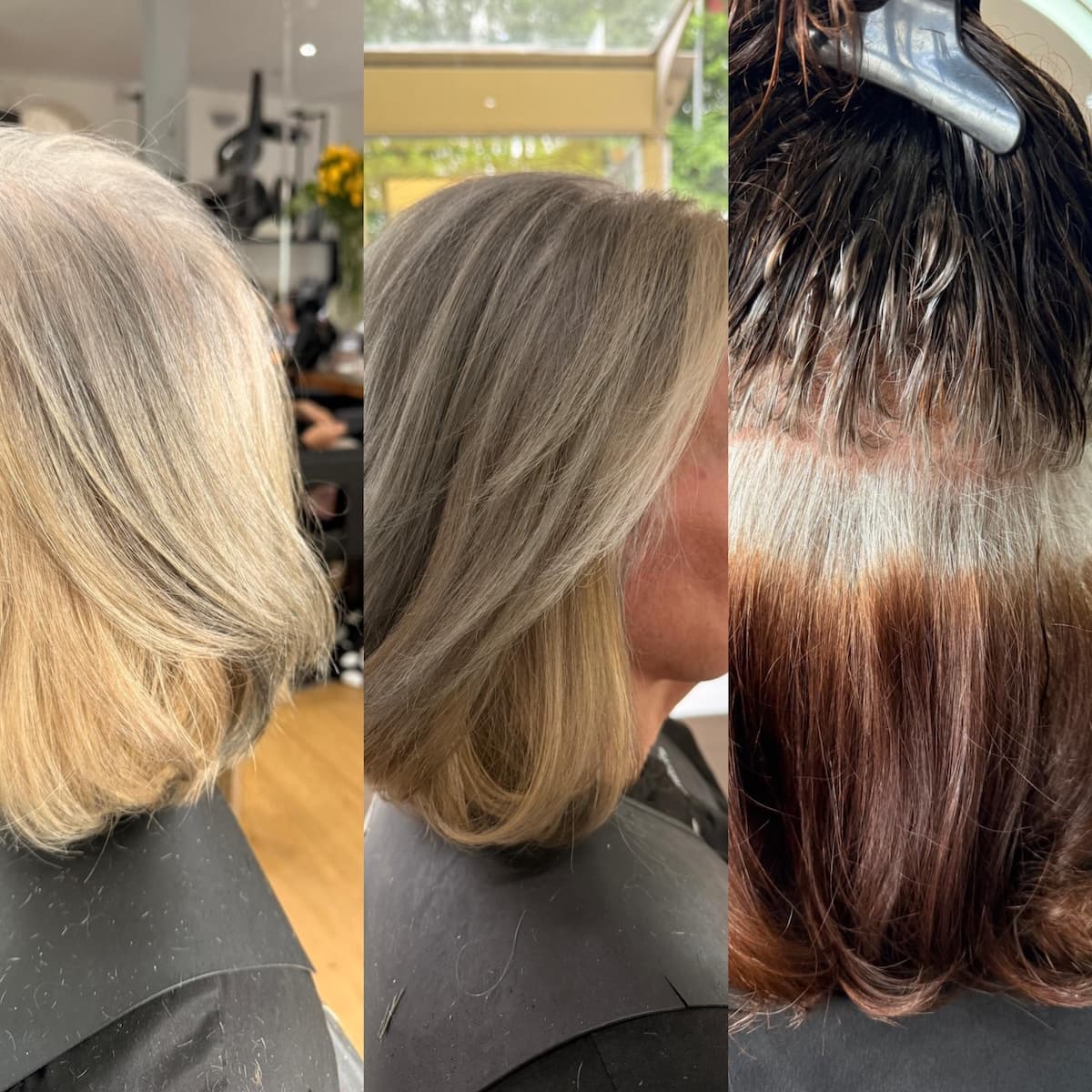
The first bright silver strands at the parting can feel far more noticeable than they really are - especially when they sit beside a strong all-over colour. Grey blending offers a softer way forward. Rather than trying to hide every grey hair, it uses carefully placed colour and tone to make regrowth look intentional, flattering and easier to live with.
For many clients, this is not about giving up on colour. It is about choosing a look that works with changing hair, suits their routine and still makes them feel like their best self. The right approach can keep your hair looking polished between appointments without the hard line of regrowth that often comes with a single-process tint.
What is grey blending?
Grey blending is a tailored colouring technique that reduces the contrast between natural grey hair and previously coloured lengths. Your stylist may use fine highlights, lowlights, glossing, balayage-inspired placement or a combination of techniques to create a more dimensional result.
The aim is not always to cover the grey completely. Instead, it softens the transition so silver strands sit naturally within the overall colour. On darker hair, that may mean introducing cool, delicate ribbons to break up a dark root. On blonde or lighter brown hair, it may involve adding depth so the grey looks purposeful rather than flat.
This is why a consultation matters. Grey hair can be wiry, resistant, concentrated around the hairline or scattered evenly throughout the head. The most flattering colour plan depends on where your grey appears, your existing colour history, the condition of your hair and how often you would like to visit the salon.

Why clients choose grey blending
A solid root tint can give beautiful coverage, but it creates a clear contrast as your natural hair grows through. If you are beginning to see more grey than before, that maintenance cycle can start to feel demanding. Grey blending is often chosen because the regrowth is gentler and less obvious.
It also brings movement to the hair. Carefully layered shades reflect light differently, helping the colour look softer and more natural than one flat tone. This can be particularly lovely for clients who have coloured their hair dark for years and now want a less severe look around the face.
There is a practical benefit too. While appointments are still needed to keep the colour fresh, many people find they can stretch the time between full colour services. A toner or gloss appointment may be enough to revive shine and refine unwanted warmth in between more detailed highlight work.
That said, low-maintenance does not mean no maintenance. Grey blending works best when the colour is refreshed at the right time, your haircut supports the look and you follow professional advice at home.
Grey blending versus full grey coverage
Neither choice is better - it depends on the finish you want.
Full grey coverage is ideal if you love a richer, more uniform shade and want the greys concealed as much as possible. It can be especially effective for clients with a small amount of grey or those who prefer a defined brunette, copper or darker blonde result. The trade-off is that regrowth can be more visible as it comes through.
Grey blending suits clients who are comfortable seeing some silver and would rather soften it than mask it. It can create a lighter, more modern feel, particularly when paired with face-framing highlights or a subtle balayage effect. However, it is not the fastest route if you expect every white strand to disappear. Being clear about that from the start helps your stylist create a result you will genuinely enjoy.
For some people, the best option sits between the two: partial root coverage around the hairline and parting, blended through the rest of the hair with fine highlights. This gives a little more coverage where grey feels most noticeable while keeping the overall grow-out beautifully soft.
.jpeg)
How your colour appointment is planned
A successful grey blend is personal, not a one-size-fits-all service. At your consultation, your stylist will look at your natural base, existing colour, percentage of grey and previous chemical services. Be honest about home colouring, box dyes, henna, bleaching and any smoothing treatments. That information protects the condition of your hair and allows for a safer, more accurate plan.
You will also talk about your goal. Do you want to stay close to your current shade, gradually go lighter, embrace more natural silver or simply avoid a harsh root line? Bringing a few inspiration images can help, but your stylist will advise on what is realistic for your hair rather than copying a photo that has a completely different starting point.
If a colour service requires patch testing, this should be completed before your appointment in line with salon guidance. It is a small but essential step for your comfort and safety.
The appointment itself may include fine foils, freehand painting, a root melt, toner and a treatment, depending on the plan. Detailed grey blending can take longer than a simple tint because the placement is what makes the result believable. It is careful technical work, and it is worth allowing the time.
A note on previously dark hair
If you have been colouring your hair dark for a long time, moving towards a softer grey blend is usually a journey rather than one appointment. Lifting artificial colour too quickly can compromise hair health or expose unwanted warmth. Your stylist may recommend gradual lightening, strategic highlights and toning over several visits.
This slower approach gives you the chance to enjoy each stage while keeping the hair looking and feeling its best. It is also easier to adjust the direction as you see how you feel with lighter pieces around your face.
Choosing shades that flatter your natural grey
Grey is not one colour. It can look bright white, soft silver, salt-and-pepper, smoky pewter or warmer near the crown. The shades used in your blend should complement both your natural grey and your skin tone.
Cool ash and pearl tones can look striking when your natural silver is clean and bright, but too much ash on every client can make hair appear dull. Beige, mushroom, soft caramel and neutral blonde tones may add warmth and softness where needed. Brunettes may benefit from fine espresso, mocha or taupe lowlights to give the hair depth without creating a block of dark colour.
Your cut plays a part too. A precision shape, layers or soft face-framing can make dimensional colour show up more clearly. If you wear your hair up regularly, ask your stylist to consider how the blend will look around the nape, temples and hairline as well as through the lengths.
Looking after blended grey hair at home
Good aftercare keeps your salon colour fresh and your hair healthy. Use professional shampoo and conditioner recommended for your hair type, particularly if it has been lightened. If your blend contains cooler tones, a violet or blue-toning product can help manage brassiness, but it should not be overused. Too much can leave porous hair looking dull or slightly violet.
Heat protection is equally important. Grey hair can be naturally drier and more textured, while highlighted areas need extra care to stay strong. Apply a heat protector before blow-drying, straightening or curling, and consider a nourishing mask when your stylist recommends one.
Sun, hard water, chlorine and frequent hot styling can all alter the tone of coloured hair. You do not need to avoid holidays, swimming or your favourite styling routine, but a little care makes a visible difference. A gloss or toner refresh between colour appointments can bring back shine and keep the blend looking refined.
Is grey blending right for you?
Grey blending can be a brilliant choice if you want less obvious regrowth, more movement through your colour and a softer relationship with your natural silver. It is especially appealing when regular full coverage no longer feels like the look - or the upkeep - you want.
At Kroma salon Glasgow, a personalised colour consultation gives you space to talk through your hair history, lifestyle and ideal finish with an experienced stylist. Whether you want to gently blend a few new greys or make a confident move towards a more natural colour, the best result starts with a plan designed around you. Book when you are ready to make your regrowth feel like part of the look, not something to hide.